
A new perspective.
From the ceiling down.
Choose the service that fits your project. We’ll help you plan the preparation and finish together.
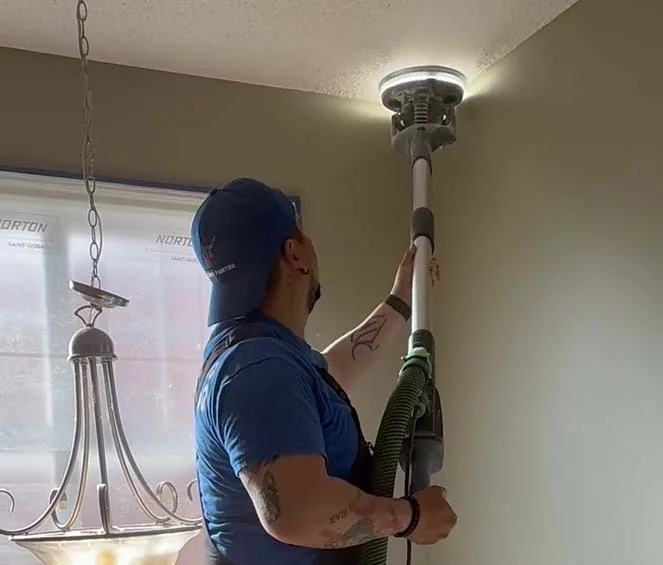
A fresh start above you. Remove dated stipple and plan a new finish that fits your home.
02 / CEILING SERVICES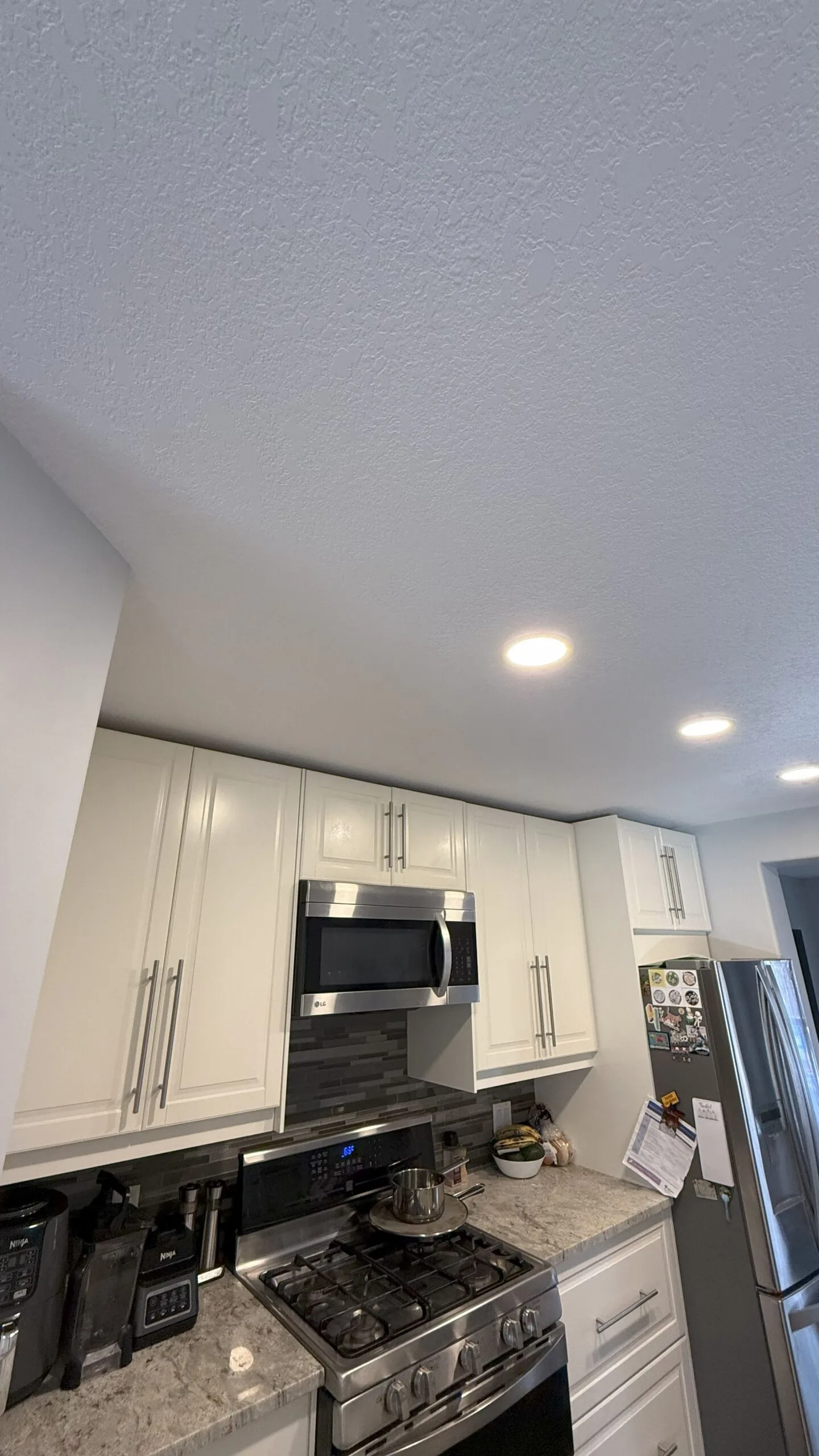
A softly textured finish with character. Update a room or refresh a tired ceiling.
03 / CEILING SERVICES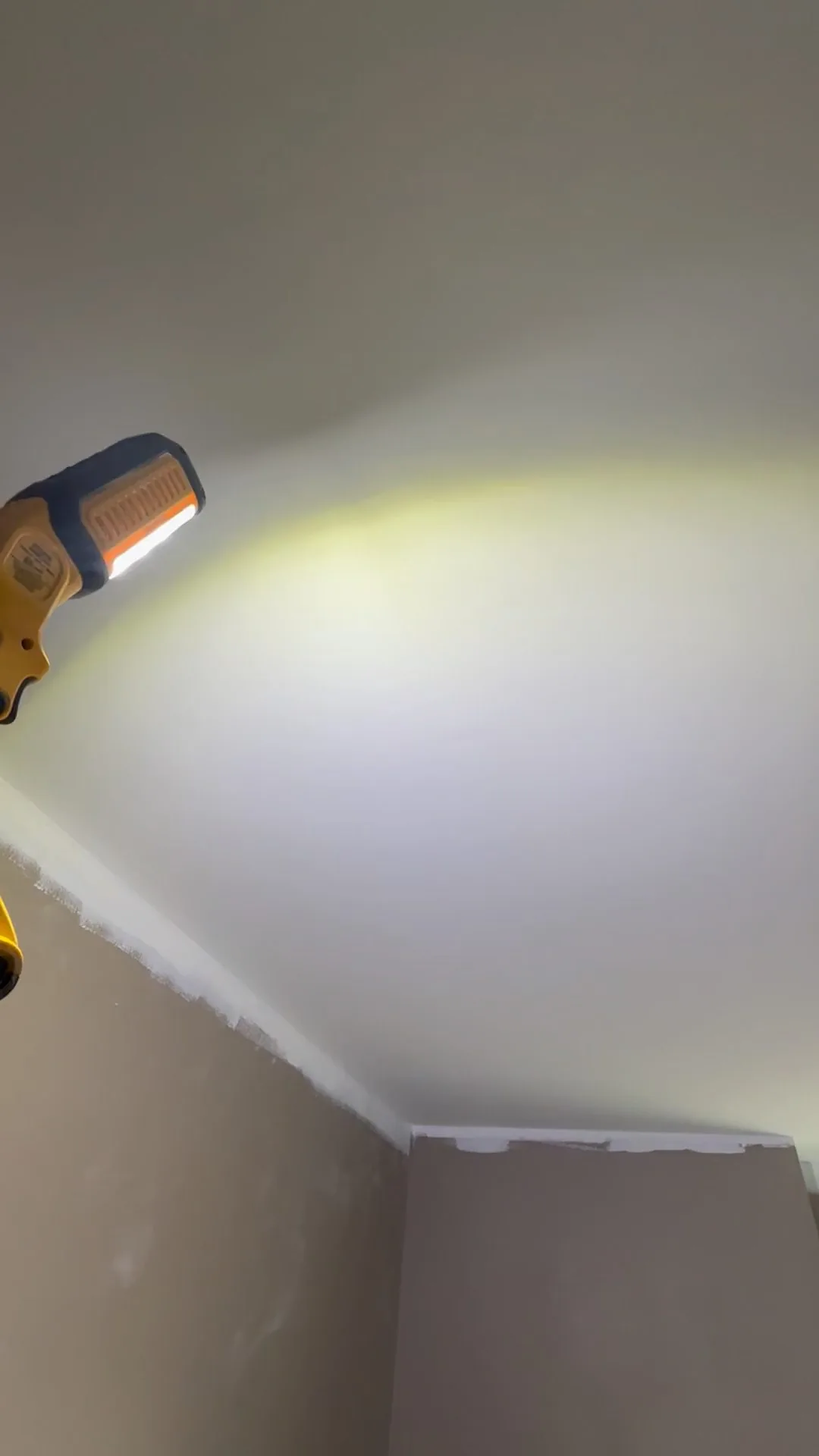
Simple lines, a clean surface, and careful preparation for a more modern room.
04 / CEILING SERVICES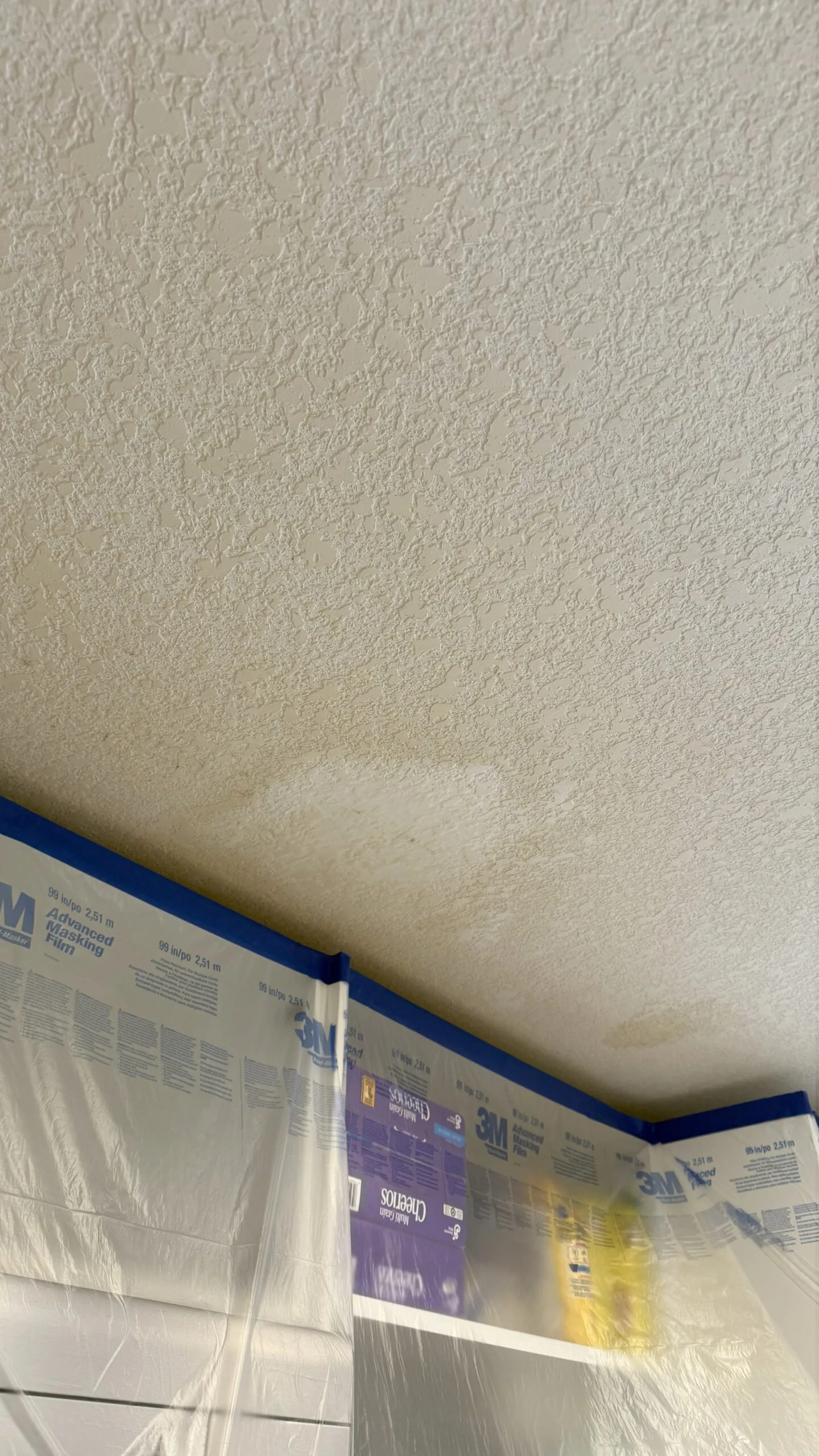
Repair damaged areas and bring the ceiling back together with thoughtful preparation and finishing.
05 / CEILING SERVICES
A fine, lightly pebbled finish for refreshed ceilings and suitable texture repairs.
06 / CEILING SERVICESPrepare the surface behind the finish, from local repairs to broader smoothing work.
Choose the work your ceiling needs
Start with the current condition and the result you want. If an existing popcorn finish needs to go, removal is the first part of the scope; the surface underneath may also need repairs before a new finish can be applied. For a damaged area, begin with an assessment of the repair and the surrounding ceiling.
Smooth, knockdown, and orange peel describe the finished appearance. They do not replace the preparation underneath. A project can include more than one service, such as drywall repair followed by texture and painting. The ceiling finish guide explains the main choices.
Plan the complete scope
Tell Ronald which rooms are involved, whether the existing ceiling has been painted, and whether other trades still need access. Discuss protection, repairs, the finishing area, priming, painting, and cleanup in the estimate. Use the estimate checklist to prepare those details before your conversation.
How a texture match is planned
Matching a repaired area starts with the existing ceiling. The pattern, paint layers, and surrounding light matter as much as the damaged patch. Chamos’s published process includes checking the original texture and testing an application pattern on a board before working on the ceiling. The material consistency, spray pattern, and timing of flattening a knockdown finish are adjusted toward the existing appearance.
A fine orange-peel pattern is often more forgiving to blend than a heavier, individual knockdown texture. A close match is the aim, but the likely result needs an honest discussion after inspection. Where several patches or old repairs interrupt the surface, refinishing a larger area may give a more consistent result.
From room protection to the final coat
The ceiling-texture process described by Chamos includes masking floors, walls, and fixtures, addressing surface defects, and priming as needed before applying the chosen pattern. Spray application and hand finishing serve different texture effects; the videos below show examples of both. New texture is then prepared for its final paint finish, and masking and debris are removed during cleanup.
Texture can soften the appearance of minor surface irregularities, but it does not replace necessary drywall repairs. Existing stains, loose material, or recurring damage need assessment before covering the surface. Confirm the preparation, texture, priming, painting, and cleanup included in the written scope for your room.
What affects a ceiling-texture estimate?
The main variables are the ceiling area, height, selected pattern, access, and repairs needed before finishing. A small patch and a full-ceiling application involve different preparation and blending requirements. Chamos offers a free on-site estimate so the surface can be assessed and the price put in writing. If you also want the walls refreshed, painting can be discussed with Chamos Painting as part of coordinating the work.
Questions about ceiling texturing
Can you blend new texture into an existing ceiling?
The existing pattern is assessed and a sample can be tested before application. Fine orange peel is generally easier to blend than a heavy knockdown pattern. Previous paint, age, and lighting can still reveal a repair, so the expected match should be discussed before work starts.
Which ceiling textures can I choose?
Chamos offers knockdown and orange peel, and can discuss a custom pattern where appropriate. Knockdown has a flattened, irregular surface; orange peel has a finer, pebbled appearance. Smooth finishing is another option when you prefer no visible texture.
Is popcorn removal the same job as applying texture?
Popcorn is a coarse textured finish. Removing it is a separate preparation stage from applying a new knockdown or orange-peel finish. If you want to replace an existing popcorn ceiling, plan the removal, surface repairs, and new finish together.
How are dust and overspray managed?
Masking and protection are planned around the floors, walls, and fixtures in the work area. Texture application can create overspray and preparation can create dust, so containment and cleanup form part of the project. Confirm room access and furniture arrangements before work begins.
Can you quote a price without seeing the ceiling?
Photos and measurements help start the discussion, but the surface, height, repairs, and desired pattern affect the final scope. An on-site estimate lets Ronald assess those conditions and provide a written project price.
Process information adapted from Chamos Painting’s ceiling-texture service. Your written estimate defines the work for your property.
See the care
behind the ceiling.
Watch texture application, preparation, and protection in original Chamos project clips. Select play to watch.
Ceiling repair and retexturing
Preparation around a ceiling opening, texture application, and the finished surface.
Applying a knockdown finish
Spraying and flattening the texture, followed by a close view of the finish.
Protecting the room before work
Floors, walls, and openings masked for the ceiling project, with close views of protected edges.
More from the Chamos team: Chamos Painting ceiling projects ↗. Watch all five project videos ↗
Let’s give your ceiling
its main-character moment.
Tell Ronald what you have in mind. Start with a free project estimate.